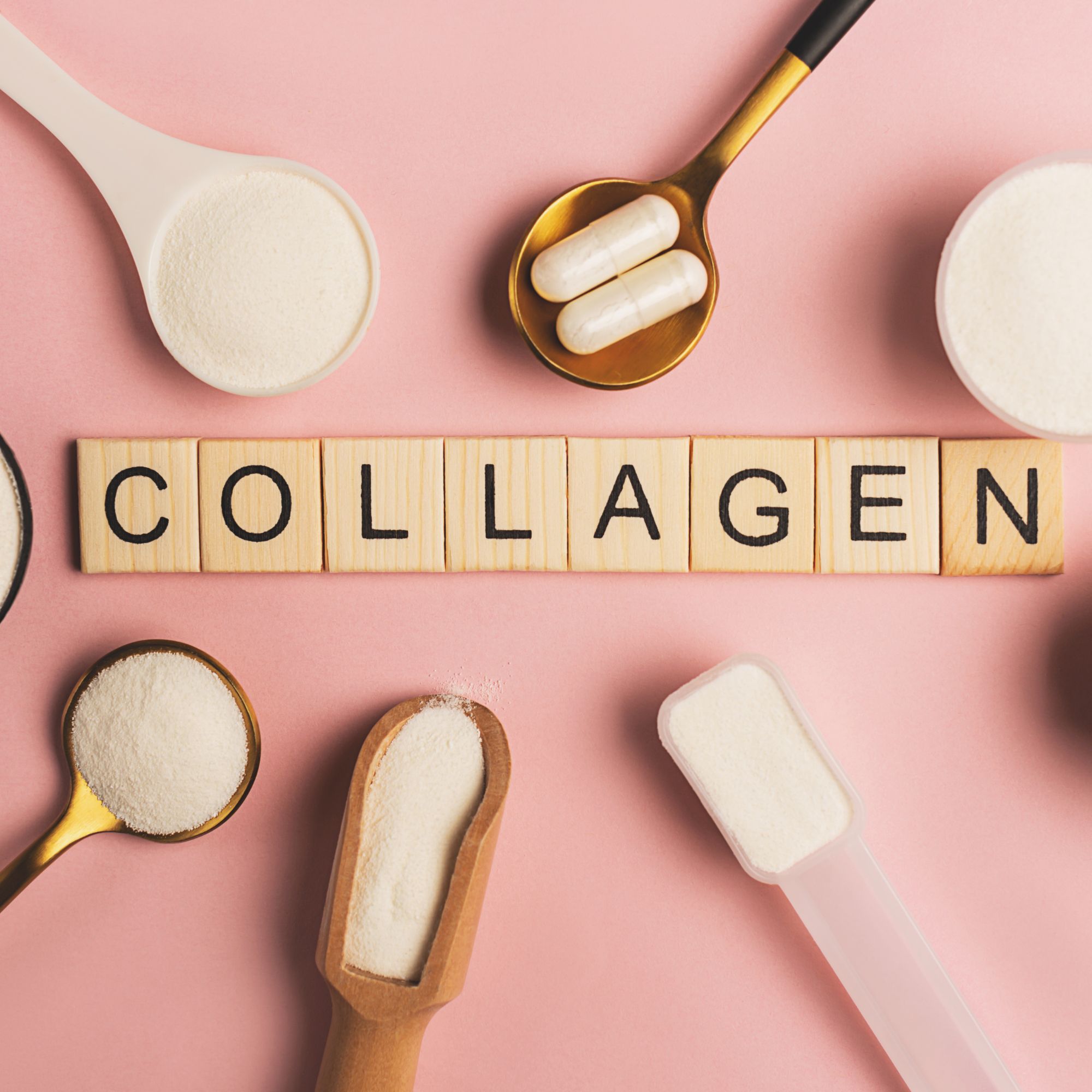
Collagen has had quite a moment. Walk into any health food store and you'll find shelves stacked with collagen powders, collagen coffees, collagen gummies, collagen waters. The industry is worth billions — and it's built largely on the idea that you need to consume collagen directly to have it in your skin.
Here's the thing: that's not quite how it works.
Your body produces its own collagen. It has done so since you were born. What changes as we age isn't some mysterious inability to maintain collagen — it's that production naturally slows, and we often stop giving the body what it needs to keep building it. Understanding what collagen actually requires to be synthesised changes everything about how you approach skin nutrition.
What Collagen Actually Is
Collagen is the most abundant protein in the human body. It forms the structural scaffolding of your skin, bones, tendons, ligaments, and connective tissue. In skin specifically, collagen is what gives it firmness, bounce, and resistance to wrinkling. We have different types — Type I is the primary collagen in skin, Type II is dominant in cartilage, and Type III contributes to skin elasticity — but Type I is what we're most focused on when we talk about skin quality.
Collagen production peaks in your mid-twenties and naturally declines from there — roughly 1% per year from age 30. Hormonal changes (particularly the drop in oestrogen at perimenopause) accelerate this further. But this process is not fixed. It is profoundly influenced by what you eat, how you sleep, and what you expose your skin to.
"Your body produces its own collagen. The question is whether you're giving it what it needs to keep doing so."
The Cofactors Collagen Actually Needs
Collagen synthesis is a multi-step biochemical process that requires specific raw materials. Without these, production slows regardless of how many collagen supplements you take.
Vitamin C
Vitamin C is the single most important cofactor in collagen synthesis. It is essential for hydroxylation — the process by which proline becomes hydroxyproline and lysine becomes hydroxylysine, which are the specific amino acids that form collagen's triple-helix structure. Without adequate vitamin C, your body literally cannot build stable collagen. This is why scurvy (severe vitamin C deficiency) causes skin and tissue breakdown. You don't need to be deficient to see an effect — even suboptimal vitamin C intake dampens collagen production. Bell peppers, kiwi, citrus fruit, and strawberries are among the richest food sources.
Glycine, Proline, and Hydroxyproline
These are the three amino acids that make up the collagen molecule. Glycine is particularly important — it constitutes about one-third of all amino acids in collagen. Your body can produce glycine, but research suggests that endogenous production alone may not be sufficient to support optimal collagen synthesis. Bone broth is the richest dietary source of all three, followed by skin-on poultry, fish with skin, and gelatin.
Zinc and Copper
Both minerals act as cofactors for enzymes involved in collagen cross-linking — the process that makes collagen fibres strong and durable. Zinc deficiency is surprisingly common and directly impairs collagen synthesis. Copper activates lysyl oxidase, the enzyme that stabilises collagen fibers. Find zinc in oysters, pumpkin seeds, and beef. Find copper in shellfish, nuts, and dark chocolate.
Bell peppers and citrus (vitamin C) · Bone broth and skin-on fish (glycine, proline) · Oysters and pumpkin seeds (zinc) · Berries (antioxidants that protect existing collagen) · Eggs (proline and lysine) · Leafy greens (vitamin C, chlorophyll)
What Destroys Collagen
This is just as important as what builds it. You can eat all the right foods and still have poor collagen status if you're consistently doing things that break it down.
- Sugar and refined carbohydrates — promote glycation, where sugar molecules attach to collagen fibres, making them stiff, brittle, and prone to breaking down. This process accelerates visible ageing significantly.
- UV exposure without protection — UV radiation generates free radicals that directly damage collagen fibres and upregulate the enzymes (matrix metalloproteinases) that degrade them.
- Smoking — impairs circulation (reducing nutrient delivery to skin), generates massive oxidative stress, and directly suppresses collagen synthesis.
- Chronic alcohol consumption — depletes zinc, disrupts sleep (when much of collagen repair occurs), and increases systemic inflammation.
- Chronic stress — elevated cortisol inhibits collagen synthesis and accelerates breakdown. Stress is an underappreciated driver of skin ageing.
So What About Collagen Supplements?
I'm not against collagen supplements — I think there is reasonable evidence that hydrolysed collagen peptides can support skin hydration and elasticity, particularly in studies using 10g+ doses daily over 8–12 weeks. But they work best when the underlying nutritional cofactors are also in place. A collagen supplement without adequate vitamin C is far less effective. And a diet rich in the cofactors I've described above — without any supplement — is genuinely capable of supporting excellent collagen production.
If you want to take a collagen supplement, look for a hydrolysed collagen peptide product, take it with a vitamin C-rich food or supplement, and be consistent. But don't let it replace the dietary foundations. The food comes first.
The most collagen-supportive thing you can do today is eat a bell pepper with your lunch, add bone broth to your cooking, and reduce your sugar intake. It's less photogenic than a collagen latte, but it's far more effective.